Wednesday, 20 June 2012

Book fairs get a new lease of life: The Guardian


First published on the Guardian book blog at http://www.guardian.co.uk/books/booksblog/2012/jun/20/book-fairs
Think of a second-hand fair and what comes into your mind? A church hall full of stoney-faced stallholders with tables of fusty goods? Chipped china plates, ancient bottles of bath oil and fraying cardigans?
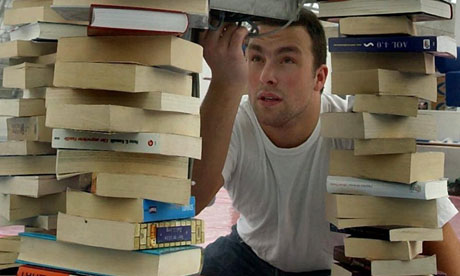
You might not expect such events to survive in the age of Ebay, Amazon Marketplace and Gumtree, but the book fair, at least, is both surviving and thriving. Long-established fairs, such as the London Anarchist Book Fair, which has been running since 1983, are packing in stalls and visitors in greater numbers than ever before. And as the old ones grow, new special interest book fairs are springing up.
Last weekend saw the launch of a new comic book fair in East London's Shoreditch, organised as part of the East London Comics and Art Festival. September will see the Free Verse Poetry Book Fair return to London after a successful trial run in 2011. Their first fair contained 23 stalls hosting poetry publishers large and small. This year over 30 publishers are involved, and a programme of readings, events and free publications is being planned for the day, with the aid of Arts Council funding.
And it isn't just London that's gone book fair-crazy. The York Book Fair(established 1974) has grown from its 20-stall origins in a pub to packing out York Racecourse with 100,000 rare and antiquarian books, while Sheffield will play host later this month to the Sheffield Anarchist Book Fair, an affiliate of the long-established London fair.
Just what is it that's making these fairs so successful, at a time when conventional second-hand bookshops are closing down? Part of the appeal is that book fairs offer up books as tactile objects for leisurely perusal at a time when readers are increasingly doing their reading on e-readers and online. Potential purchasers can feel the heft, the quality of the paper - and in the case of second-hand books, look for intriguing dedications in the back. What's more, they can do this in the presence of knowledgeable publishers and booksellers - which is why books and pamphlets with beautiful illustrations or high production values are often to be found at book fairs.
Of course, this still doesn't explain why fairs should succeed where second-hand bookshops struggle - but perhaps the answer to lies in the sociability of browsing. A book fair is not just a static location - it is an event. More often than not it includes guest speakers, workshops and poetry readings. Visitors can mingle, meet friends and form acquaintances with others who have similar literary or political interests.
It is a book-selling formula which is proving so popular that Charles Boyle (organiser of the Free Verse Poetry Book Fair) is considering purchasing a van and taking a travelling book fair with a quirky selection of books all around the country - in a bookbuyers' answer to the endangered travelling library.
Have you made any great buys at book fairs, or visited any you would recommend (or otherwise)? Let us know.

Thursday, 14 June 2012

Penning Perfumes: when scent and poetry mix


Penning Perfumes: when scent and poetry mix

A new anthology inspired by perfume is a reminder of how important smell is to literature

Remember the international scandal Fay Weldon caused when she did a deal with the Italian jeweller Bulgari to write diamonds into a novel, The Bulgari Connection, in exchange for a healthy cheque? Not even a pointed east London eyebrow was raised by the most recent engagement between literature and luxury goods, which came to fruition at a London poetry event this week.
The event was to launch an anthology called Penning Perfumes, which has brought poets and perfumers together to inspire each other's work. Poets wrote in response to mystery fragrances (with their composition revealed on the night), while perfumers created new scents based on poems written for the purpose.

In a basement bar, a small, well-dressed crowd gathered to smell strips of card imbued with fragrance. Their host, the camply stage-named Odette Toilette, opined about the history and qualities of the perfumes. The venue was The Book Club, near London's Old Street station. The event, a monthly occasion called Scratch + Sniff, which bills itself as "an intoxicating blend of literary soirĂ©e meets perfume sampling meets social club". Just a regular pub evening then.
This Scratch + Sniff event was somewhat different, though, as it doubled as a launch party. Between Odette's olfactory introductions, poets took to the stage to read. Audience members wafted the appropriate scent strips beneath their discerning noses as Charlotte Newman, Tim Wells, Amy Key and others stepped up to the mic in turn to describe their individually assigned fragrance in verse.
The experience was quite overwhelming. Smells swirling around the room were simultaneously characterised within language – soap and parma violets morphed into an urban pixie, orange blossom notes became fruity pillow-talk, and liquorice coloured the sky a deep maroon.
Poetry is sometimes accused (even by those within it) of obscurity and a lack of engagement with worldly realities. Events such as this one could be similarly criticised for wafting on a perfumed cloud a few inches above normal life. But this isn't how it appeared to strike those in the room.
Experiencing scents and words at the same time led to a level of rapt concentration in the audience that I've rarely seen at other events. Perhaps this is because the Penning Perfumes project reminds us that smell is a democratic sense: everyone can have an imaginative response to scent. It can be highly cerebral, but it does not have to be. It goes all the way from an expensive bottle of perfume to the free-for-all of everyday odours.
For the perfumers present at the launch, this is already a truism. One explained his satisfaction at finding that his partnered poet characterised the scent just as he himself had imagined it. After hearing Tiffany Anne Tondut's poem, The Rabbit is Dancing in the Garden – in which French and English lovers exchange sweet riens – Angela Flanders, the creator of the scent Ambre Noir, heartily agreed that "The best way to learn French is on the pillow".
While the olfactory sense is sometimes overlooked in day-to-day life, it has always provided inspiration for poets. The Penning Perfumes anthology opens with the 2005 poem, My Mother's Perfume, by Pascale Petit. Emily Dickinson's poems are so loaded with fragrance that she has provided the scent industry with a whole perfumery of names for their products.
What is your favourite scent-inspired work of literature? Olfactory influences are not always obvious, as this poem from the anthology shows:

The Rabbit is Dancing in the Garden
by Tiffany Anne Tondut
(inspired by the fragrance Ambre Noir by Angela Flanders)
You give me
    le jardin and le lapin. Untying
with my tongue, I try:
    le lapin dans le jardin.

    "Oh?
The rabbit is dancing in the garden?"
    No, the rabbit is IN the garden.
"Ah! Zhen pronounce it 'dohn' not 'danse''
    you laugh.
 Ce soir
you mock my le's and la's, catch out
    my stuttering accent as I
process into compounds, into
    stems.

    Then
merci pour les corrections…….I blush,
dispersing blooming pheromones
of scent, evoking lingerie…
……….its girlish spread…………….
……….of budding…………….
    print………................................
arousing words I needn't say,
   enough
      to make you twitch.

Saturday, 2 June 2012

Interview with Daljit Nagra: CAKE literary magazine


First published in CAKE Magazine, Summer 2012 Cherry Bakewell Issue


Review: Tippoo Sultan’s Incredible White Man Eating Tiger Toy Machine!!! by Daljit Nagra (Published by Faber, 2011).  Review and Interview by Faye Lipson.

Daljit Nagra requires scant introduction. His rapid ascendancy to the Forward Prize in 2007, and international acclaim which followed,  began just 4 years previously with the release of his first pamphlet- itself a winner of the prestigious Poetry Business competition. The collection which was to follow, Look We Have Coming To Dover! , garnered attention for its exuberance and linguistic playfulness in addressing the theme of British immigrant identity. This, (and the tendency to give his collections quite eccentric names), are characteristics which have persisted in his new collection, Tippoo Sultan’s Incredible White Man Eating Tiger Toy Machine!!! .

The book picks up where Dover left off in examining the postcolonial themes of ‘Britishness’ and the effect of the empire, and subsequent partition, on Anglo-Indian identity. Nagra often explores these ideas through the creation of remarkably rich and compelling ideolects for his poetic characters, which combine inventive Sikhisms like ‘sweet as ladoos’ with the earthiness of a Yorkshire accent. In ‘Raju t’Wonder Dog!’, one stanza alone manages to marry Morrisons and reincarnation, Hindu gods and shoplifting with a seamlessness which can only be attributed to his capacious linguistic imagination.

In ‘The Ascent of a Victorian Woman’, we are given the reverse of the colonial coin, as we follow the Indian progress of a haughty colonist drawn along by 2 bullocks. The image would provide ample humour for the reader, if not tainted by her contempt for the ‘shrivelled’ natives. Her description of the Hindu culture, ‘once the cradle of civilisation’ as ‘fallen into parody’ displays Nagra’s wit in parodying the arrogance of Victorian culture, itself once the supposed cradle of civilisation. Cultures, this collection reminds us, are as mortal as those who live within them, and equally complex, contradictory and heterogeneous. It brings us to wondering what generations of future poets will make, in hindsight, of our current times and mores.

Fatherhood is one of the more surprising, intimate turns this collection takes in its exploration of cultural identity. Considering the dual ethnic heritage of his own children in ‘Octoroon’, he imagines that at bath time, the bubbles themselves ‘gasp’ at the cocoa skin of his blonde, blue-eyed baby, in a conceit born out of the Imperialist ‘White Man’s Burden’ adverts for Pears soap. It is one of many powerful and uneasy images arising from a grappling with unresolved issues of ethnic identity which still haunt a supposedly cosmopolitan Britain.

Much of Daljit Nagra’s strength lies in his ability to combine the mundane with the extraordinary in witty and absorbing insights into multicultural Britain. A picture emerges of a Britain which is simultaneously cosmopolitan and yet not quite at ease with the fact. British imperialism is presented as a kind of cultural Ozymandias: a faded yet grotesque reminder of former audacity and tyranny. It is a testament to Nagra’s skill as a poet that these ideas are accessible without an obtrusive or soap-boxy style of narration. His packed, effusive language cuts a swathe through the more sedate and deadpan iambs which populate British poetry right now. Tippoo Sultan is a remarkable collection, which throws down the poetic gauntlet in ways which have the power to provoke, and to change the way things are done.


Interview with Daljit Nagra


When writing Dover you were less established as a poet. How has its success change the way you approached writing in general, and specifically Tippoo Sultan?

I’ve continued trying to write in the ideal and continued to imagine that possibly no one would be interested in my poetry. This probably comes through with the verbally aggressive poems or the ones that seem a bit too compact and that probably won’t have a mass audience appeal. Essentially, I’ve continued pursuing the projects I had in mind about forms, rhetoric and content that were started in Dover.


You've said that you travelled India in order to conduct research for your poetry. Can you tell me about that? Did that influence your latest collection?

I used a chunk of my arts council grant to visit Calcutta and Darjeeling. The first was the empire’s original seat of power and the latter was one of the hill stations they’d go to so they could cool off. Several poems are influenced by this journey. Pukka Verse, The Victorian woman poem – I came across Mazuchelli’s book in Darjeeling, and I started my Kipling rewrite poem there too. I see the empire as my historical starting point on earth – if it wasn’t for the empire my family wouldn’t have moved here and I wouldn’t have become a whitey!

Quite a lot of your new collection displays so-called ‘prose’ skills, such as creating compelling characters with their own narratives and idiolects. Are prose techniques an influence on your poetry? Would you ever turn your hand to prose?

Once I had the idea of Tippoo Sultan’s toy as an idea for a title for the 2nd book, which was a few years ago, I decide I wanted to pounce on things as the tiger does on the soldier. One way to pounce was to seek out English sources and re-do them hence the takes on Victorian writers. The narratives came from a stylistic impulse. I don’t have the slightest desire to write plays or prose as I’m still keen to experiment with language in poetry. It’s the play with language that interests me in writing and I can play around in many styles by writing many poems for a collection as opposed to being bound up with one novel over time.

Tippoo Sultan as a collection seems to centre on the shock of alienating and displacing cultural norms. London becomes the scene of a Bollywood love story, and a character quips about ladoos in a Yorkshire accent. Is this a theme you consciously set out to pursue with the collection? Is that shock value lacking in the poetry world?

I’m never aware that any of my poems may ‘shock’ but that that is an effect for the reader. If the poems I write surprise me in a pleasing way I continue developing them. I’m never sure where a poem will end up once I have started it. In contemporary poetry, what I look for is play with language and imagination exploring itself; if I find this I like the poem and then hopefully the poet. I think we need more play in contemporary poetry.


You have a reputation for being highly innovative, especially with your use of language and dialect. What, in your opinion, still needs shaking up, and what can we expect next from you?

I want to continue experimenting with language and forms to see if I can still write poems that genuinely excite me. I want to sense this in other poets: that they have enjoyed writing the poem. Often I feel the poet is writing as a ‘poet’ with a serious head on to communicate an idea. If this latter is the intention of the poet then perhaps they should write an essay. I want to sense a poet having gone on a journey in their work and having enjoyed ending up somewhere they didn’t necessarily think they’d end up.

Thursday, 9 February 2012

The Spoken Word & Me: Spoken Word London


First published at: http://www.spokenwordldn.com/2012/02/01/the-spoken-word-me-faye-lipson/
London-based poet Faye Lipson won the Foyles Young Poet commendation in 2007. She works as a poet with the National Trust, and is about to take over the reigns of the poetry section at Sheffield’s Route 57 zine. Currently a member of the Barbican Young Poets collective, Faye has performed with Daljit Nagra, and has been showcased in various publications including Rising and The Morning Star.
She writes for us about her work and what exactly draws her to the spoken word.
I’ve been performing spoken word poetry almost as long as I’ve been writing it. After a winning the Foyle Young Poet commendation, I was introduced to London’s dizzying poetry and performance scene. The exhilaration of performing a well-received spoken word set is unlike anything, and it’s that buzz which has seen me through readings and slams in London and Sheffield for the past three years. I view the growing popularity of spoken word poetry as an acknowledgement that the separation of poetry into the categories ‘page’ and ‘performance’ is clumsy and somewhat artificial. Of course noone denies that some poems might suit performance more than the page, and vice versa, but often a single poet will write some poems more suited to ‘stage’, some to the page, and some which bridge both categories.The best poems (and poets) have something to offer their audience through both modes of presentation, and this is something I strive for in my own work.
Spoken word poetry is unaccountably still looked down on by some within the poetry world. This is unfortunate, because anyone who has experienced a range of spoken word poetry events knows that it is just as capable of subtlety and intelligence as its page-bound relative. It seems to be a fact overlooked that in many cultural groups, poetry has been conveyed orally for the majority of its history. You don’t hear of anyone denigrating song-like ballads such as The Twa Corbies, or the entire bardic tradition, for being unsubtle. Poems from oral traditions often have a rhythmic intensity which sustains narratives or social commentary. Spoken word today is a powerful method of social comment, and many of my politically-motivated poems tend naturally towards a spoken word format.
One danger I try to avoid when writing spoken word poems is overdoing the strength of the rhyme. If a rhyme is too obvious, as a listener you might focus on anticipating the next rhyme sound rather than on the meaning of the things being said. To avoid smacking my audience round the head with an obvious rhyme, I try to use internal rhymes, half rhymes and enjambment to limit the impact. That’s not to say that poetry which is written with the page in mind doesn’t have its own pitfalls to steer clear of. It doesn’t matter how deep and meaningful your ideas are if they are fogged in a really dense, stultifying prose. Something which manages to express compelling ideas in an aurally pleasing way is, for me, the epitome of great poetry, and will shine out in any setting.

Tuesday, 1 November 2011

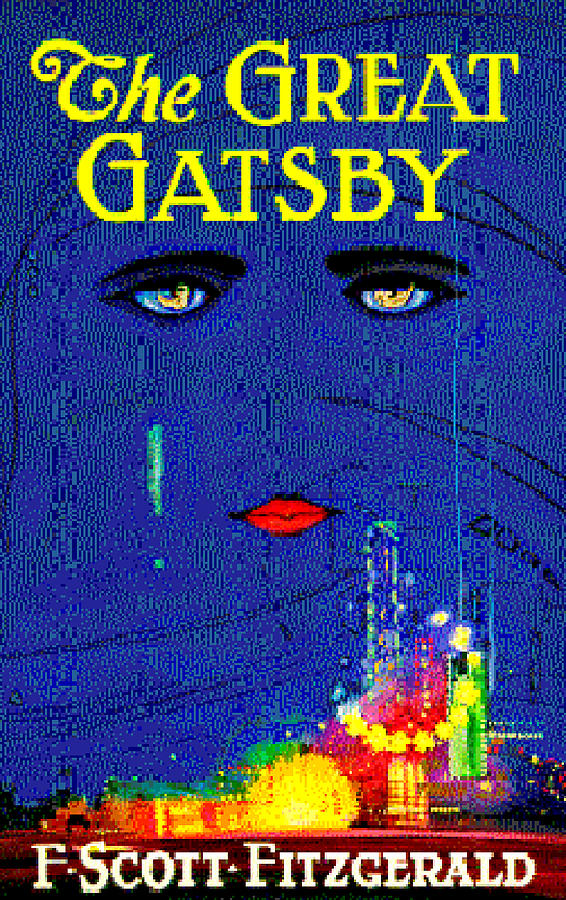
Why we love The Great Gatsby: NUS online


"I've been drunk for about a week now, and I thought it might sober me up to sit in a library." Such utterances epitomise the louche characters which populate F. Scott Fitzgerald’s novel, The Great Gatsby. Whether these lines will make the final cut of the upcoming Baz Luhrmann film adaptation remains to be seen when it roars into UK cinemas on Christmas Day 2012.

With its renowned director and a cast including Leonardo DiCaprio, Carey Mulligan and Tobey Maguire, it is likely to be a considerable hit. But as the fifth film adaptation since the novel’s publication in 1925 (the very first, in 1926, was a silent film – the most recent was a made-for-TV film in 2000), just what is the enduring appeal of the novel which drives us to revisit it again and again?


Now considered a classic roaring 20s novel, The Great Gatsby documents a time of rapid and extraordinary growth in prosperity, centred on New York City and its burgeoning Wall Street stock market. Narrated through the voice of the charming yet untrustworthy Nick Carraway, we encounter the old-money privilege of Tom and Daisy Buchanan, and the nouveau riche lifestyle of Mr Gatsby – the origin of whose fortune remains a mystery until the novel’s end.


With an ongoing financial crisis which has its roots in the failure of banking systems and financial markets, the need to revisit Fitzgerald’s novel is unsurprising. In uncovering the sham behind Gatsby’s new wealth and self-creation, Fitzgerald speaks to our current predicament of economies based on the fictions of futures markets, and of wealth which amounts simply to rows of zeros on a computer.While much of this novel’s appeal lies in the glamour of moonshine liquor, jazz and dancing girls, it seems likely that readers and audiences will want to revisit this story for as long as it resonates with their present struggles.